
Shuttle Bus Questions, Answered: 42 Things Buyers and Sellers Ask Most
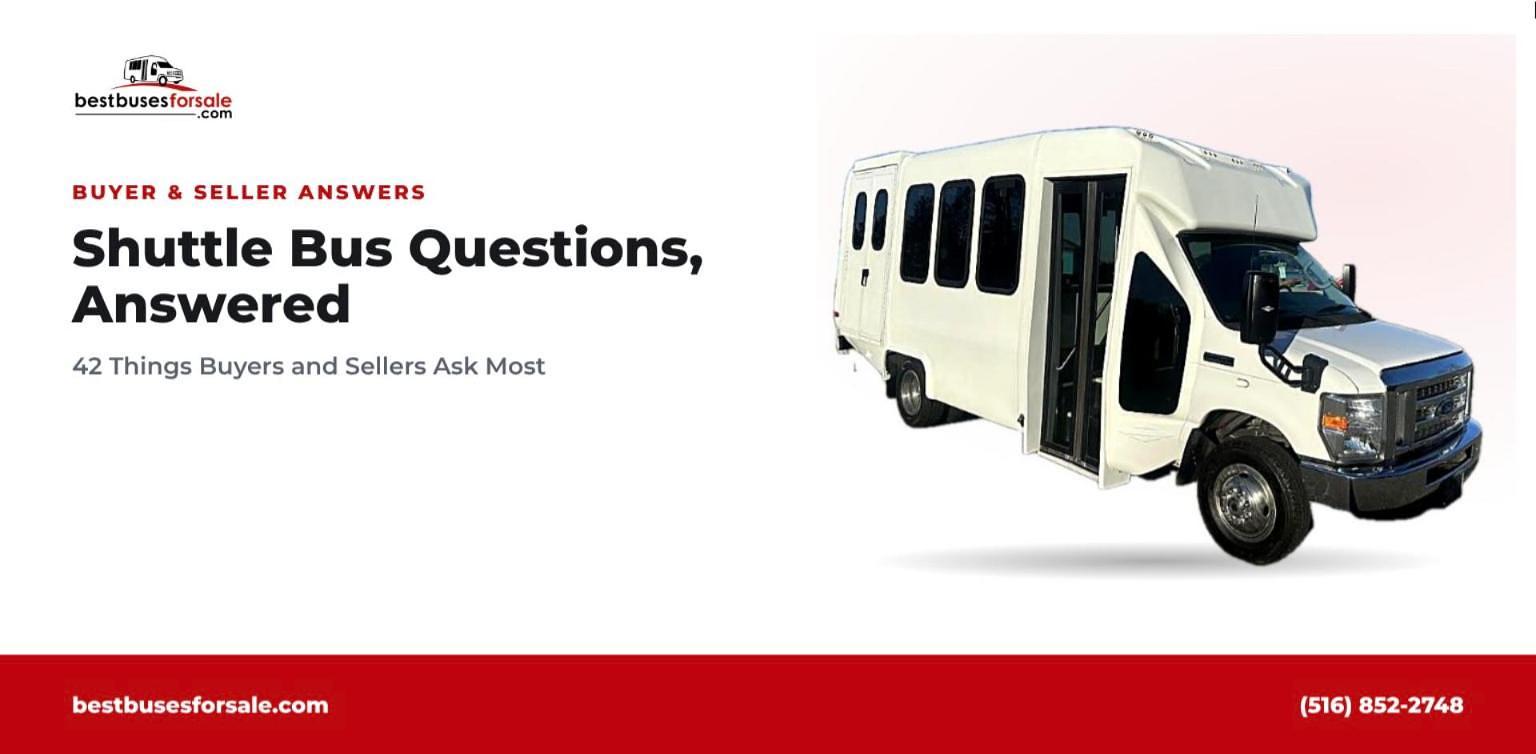
Over the years I've answered the same good questions hundreds of times, on the phone, in the yard and in emails late at night. This page gathers them in one place. We collected the questions people ask dealers, listing sites, owner forums and AI assistants, then answered each one the way I would across the desk, with the federal rules checked against the sources at the end.
Want more depth on one topic?
- Do You Need a CDL to Drive a Shuttle Bus? CDL, USDOT and Insurance Rules
- How Many Miles Is Too Many on a Used Shuttle Bus?
- Wheelchair Bus Questions: Lift Ratings, ADA Rules and Section 5310 Grants
- Selling a Used Bus: Sell to a Dealer, Broker It or List It Yourself?
Licenses, Rules and Paperwork
Do I Need a CDL to Drive a Shuttle Bus?
Under federal rules a driver needs a CDL with a passenger endorsement when the bus is designed to carry 16 or more people counting the driver, or when it is rated over 26,000 lb. So a bus with 15 passenger seats plus the driver's seat needs a CDL. A bus with 14 or fewer passenger seats on an E-350 or E-450 usually doesn't. FMCSA counts designated seats only, not standing room. States can add their own rules for church, school or for-hire drivers, so check your state too.
Manny's take: Don't buy a 15-passenger bus planning to pull a seat to slip under the line. Get your state DMV's answer in writing first, and if your drivers don't hold CDLs, buy a bus that never needed one.
More: State Buyer's Guide
Do I Need a USDOT Number?
You need one if you cross state lines and the bus is built or used to carry 16 or more people counting the driver, or 9 to 15 people for pay. Pay can be direct or built into what you charge, like a hotel or employer shuttle. FMCSA's rules can also reach private operators that don't charge riders, depending on the bus's size and weight. Run FMCSA's "Do I need a USDOT number?" check before your first out-of-state trip. Trips that stay in one state follow that state's rules.
Can a Church, Camp or Daycare Carry Children in a Used Shuttle Bus?
Federal school bus rules control the sale of new vehicles. A new bus or van for 11 or more people that will be used significantly to take students to or from school or school events has to meet school bus standards. NHTSA's rules don't forbid selling or using used vehicles for that, but many states have their own pupil-transport rules, and your insurer will have opinions too. For regular school runs, ask your state's pupil transportation office. For church outings, camps and activities, a well-kept shuttle bus with trained drivers and seat belts where fitted is common.
More: church buses for sale
How Much Insurance Do I Need, and What Will It Cost?
For-hire carriers crossing state lines must carry at least $1.5 million for vehicles that seat 15 or fewer counting the driver, and $5 million for 16 or more. Churches and private fleets set their own limits with their agent, and many church insurers require a written driver policy. Prices depend on your drivers, your use, where the bus is kept and the bus itself, so there's no honest one-size number. Get a quote on the actual VIN before you buy. A surprise premium is the most common reason a bus deal falls apart late.
More: bus insurance page
What Paperwork Comes with a Used Bus?
At minimum: the title signed over correctly, a bill of sale with the VIN, price, date and both signatures, and an odometer disclosure where it's required. Federal odometer disclosure applies to model year 2011 and newer vehicles for 20 years. Buses rated over 16,000 lb are exempt, but most E-350 and E-450 shuttle buses are rated below that, so plan on it. Ask for any service records, the lift's manual and inspection history, and the keys and fobs.
Manny's take: We don't buy or sell a bus without a clean title in hand, front and back. It is the one rule in this business I have never bent.
Which of These Records Does the DOT Actually Require?
It depends on how you operate. Carriers running 9-to-15-passenger buses for indirect pay (hotel, employer and similar shuttles) across state lines must register, mark the bus with the USDOT number and keep an accident register. Larger and for-hire operations take on more: driver files, inspections and maintenance records. Even where nothing is required, written pre-trips, lift logs and maintenance records protect you with insurers and in court, and they raise the bus's value when you sell.
Choosing the Right Bus
How Many Miles Is Too Many? How Long Does a Shuttle Bus Last?
Federal transit rules set minimum service lives before an agency can replace a grant-funded bus. Light-duty mid-size buses get 5 years or 150,000 miles, smaller light-duty buses and vans 4 years or 100,000, and medium-duty buses 7 years or 200,000. Those are minimums, not the end of the road. That's why so many good used buses come out of agencies right around those marks. What really ends a shuttle bus is rust in the frame or floor, a soft floor, or a transmission that was never serviced, not the number on the odometer.
Manny's take: Given the choice, I'll take a 140,000-mile bus with a thick folder of records and a dry, solid floor over a 70,000-mile bus that spent its life in a salted lot. The odometer is the last thing I read.
Why Do So Many Used Shuttle Buses Come From Transit Agencies?
Agencies buy with federal grant money and replace buses once they reach those minimum service lives, so a steady stream of 5-to-8-year-old buses comes to market. The upside is fleet maintenance and, often, a wheelchair lift. The trouble is that agencies sell many of them at auction, where the worst units get dumped with no history and no test drive. Bought direct or from a dealer who has driven it, an ex-agency bus can be a great value.
What Does a Used Shuttle Bus Cost?
From the asking prices our Radar tracks nationwide (November 2026), most 2014 to 2020 shuttle buses ask about $20,000 to $33,000, and 2021 and newer jump past $55,000. Rust, miles, a wheelchair lift, seating count and diesel vs gas all move the price. Asking prices aren't selling prices, and a $5,000 cheaper bus that needs a transmission and a floor isn't cheaper. The price chapter of Buy the Right Bus has the full chart.
More: Shuttle Bus Price Index · reconditioned buses for sale
Gas or Diesel? V10 or the New 7.3?
Ford's E-350 and E-450 used the 6.8L V10 through model year 2019, skipped 2020, and have used the 7.3L gas V8 since 2021. Both are simple, cheap to fix gas engines any truck shop knows. Diesels mostly show up on larger F-550 and medium-duty buses. They pull hard and last, but modern diesels carry emissions parts (DPF, DEF) that cost real money when they fail and don't like short, stop-and-go use. For a church, camp or shuttle route, gas is usually the smarter buy.
What Fuel Mileage Will I Get?
Plan on single digits. Owners who track their Ford E-450s on Fuelly average roughly 7 to 8 mpg across model years (mostly motorhomes, which run heavy). Route, load, tires, idling and the A/C all swing it. Budget fuel from your real weekly miles at about 7 mpg and you won't be surprised.
Shuttle Bus or 15-Passenger Van?
A van is cheaper to buy and park, but a shuttle bus gives you stand-up headroom, a center aisle, a door at the curb, room for a wheelchair lift and a body built to carry people every day. New 15-passenger vans can't be sold to schools for regular student transport unless they meet school bus standards. If you carry a full load often, or carry seniors or children, the bus is the safer and easier choice.
Will It Fit in My Garage or Under My Carport?
Measure before you shop. Shuttle buses vary by body builder and roof, and roof A/C and escape hatches add height. Our Spec Finder lists heights, lengths and weights by model so you can check before you fall in love with a bus.
More: Spec Finder
Can I Turn a Shuttle Bus Into a Camper?
Yes, and shuttle buses make good small conversions: stand-up height, a sturdy frame and no CDL. Before you buy, check how your state titles and registers a converted bus. Some want specific RV features before they'll re-title it, and the insurance changes too. Weigh your build as you go. Water, batteries and furniture add up fast against the chassis rating.
Can I See a Vehicle History Report?
Run the VIN through a history service, but don't expect much: fleet buses are often serviced in-house and the report can be thin. Ask the seller for fleet maintenance printouts instead. Run the VIN at nhtsa.gov/recalls for open Ford chassis recalls, and call the lift maker with the lift's serial number. Lift recalls are tracked by the lift, not the bus.
Is There a Warranty on a Used Bus?
Almost never. Used commercial buses are normally sold as-is, and ours are too. A newer bus may still have some factory chassis coverage left, so check the in-service date. That's why the inspection, the test drive and an honest seller matter more here than with a car.
Manny's take: We sell as-is, which is exactly why I drive every bus myself and fix what I don't like before it's listed, whether that means a new roof covering or a rebuilt transmission. Then I'll walk you through all of it on video.
Wheelchair Buses
How Much Weight Does a Wheelchair Lift Hold?
Under the ADA rules for public transit, lifts must have a design load of at least 600 lb, with large safety margins built into the parts. Many commercial lifts are rated higher, often 800 to 1,000 lb. Read the data plate on the lift itself, not the listing, and make sure it covers your heaviest rider in a power chair plus an attendant if one rides along.
More: what to inspect on a used wheelchair lift · wheelchair buses for sale
Does Our Bus Have to Be ADA Accessible?
Public agencies buying used buses for fixed-route service must make documented good-faith efforts to find accessible ones before they can buy one without a lift. For private operators it depends on the service: who rides, whether it's open to the public and whether you already provide equivalent service. If you carry riders who use wheelchairs at all, a lift bus is the practical answer. Ask your attorney about your exact obligations.
Can We Get a Grant to Help Pay for a Wheelchair Bus?
Often, yes. The federal Section 5310 program funds transportation for seniors and people with disabilities. Private nonprofits are eligible through their state or regional program, and the federal share of vehicle purchases is up to 80 percent. Each state runs its own application cycle, and many only fund new vehicles, so call your state DOT's 5310 coordinator early and ask whether used buses qualify.
More: our Section 5310 guide
What Does a Listing Like 13/2 Mean?
In our listings the first number is the most passengers the bus seats and the second is the most wheelchair positions, with the driver not counted. Seats fold up to make room for wheelchairs, so you can't use both maximums at once. Every listing spells out both setups, for example "up to 13 passengers, or 12 passengers plus 2 wheelchairs."
Money, Taxes and Getting It Home
How Do People Finance a Used Bus?
Most use a bank or credit union, a commercial equipment lender or, for churches, a church lender. Lenders look at the bus's age and miles, so have the year, VIN, price and photos ready when you apply. Get pre-approved before you shop seriously. Good buses priced right don't wait for a loan committee.
More: financing page
Can My Business Write Off a Shuttle Bus?
Often, yes. Vehicles designed to seat more than nine people behind the driver are excluded from the tax code's lower cap on heavy SUVs, so a shuttle bus used more than half the time for business can qualify for the general Section 179 deduction and bonus depreciation. Your accountant has the final word. We're not tax advisors.
Do I Pay Sales Tax If I Buy Out of State?
Generally you pay sales or use tax where you register the bus, often collected by your DMV at registration. Tax-exempt organizations, like many churches and nonprofits, should send their exemption paperwork before the sale so the bill of sale is written correctly. Rules vary by state, so confirm with your DMV or accountant.
How Do I Get the Bus Home?
Two ways: drive it home on a temporary permit from your state, or have it hauled. We haul on our own flatbeds: no miles on the bus, no wear, no hotel bills, and it arrives the way it left. Delivery is priced by quote from distance and route. On brokered buses the buyer pays transport.
Manny's take: My family has been in transportation and logistics for decades. A bus that arrives on a flatbed shows up without new stone chips, new miles or the surprises of a 900-mile drive in a bus you met last week.
What's the Safest Way to Pay or Get Paid?
Bank wire or a cashier's check you verify by calling the issuing bank from a number you look up yourself. The classic scams: a buyer "overpays" with a fake check and asks for the difference back, or pushes an escrow site you've never heard of. Before you wire money to anyone, call them on a number you already know and confirm the instructions out loud. Email instructions can be faked.
Manny's take: If you're wiring us, call (516) 852-2748 and confirm the wire instructions with me first. We'll never change our bank details by email.
Can You Ship a Bus Overseas?
Yes. We've sold buses to buyers in the Bahamas. We arrange shipping to your port, your agent takes it from there, and payment is by wire. U.S. rules require the export filing and the original title to reach Customs at least 72 hours before a used vehicle leaves the country, so plan for that time. We provide the documents your agent asks for.
How the Best Buses Marketplace Works
What's the Difference Between Your Own Buses, Brokered Buses and Classifieds?
Our stock (stock numbers starting with B) is owned by us, driven by me and reconditioned before it's listed. Brokerage Offerings (stock numbers starting with X) belong to their owners. The bus stays with the seller, the seller supplies the photos and the description, and we handle the deal. Classified ads are placed by private sellers, who deal with buyers directly. That's a separate service, and those buses aren't our stock or our brokerage. Every listing says which one it is, so you always know who stands behind the bus.
Can You Find a Bus You Don't Have in Stock?
Yes. Tell us what you need on our Find Me a Bus page: size, lift, budget, timing. Our Radar watches dealers, auctions and private sales across the country, and we'll tell you when the right bus shows up. We also find matched sets and fleets, and we can customize a bus to fit how you'll use it.
More: Find Me a Bus
Can You Help Me Find Parts for an Older Bus?
Yes. Engine and running gear parts come through Ford. Body, door, window and seat parts come through the body builder's network, and many older body parts are discontinued. We run a parts sourcing service, including hard-to-find and obsolete parts. Send us the VIN, body maker and a photo.
More: Parts & Repair Resources
Can I See a Bus Before I Buy It?
Yes. We meet customers at 190 East Main Street, Huntington, NY, Monday to Friday 9 to 5 and Saturdays by appointment. If you're far away, ask for a live video walkaround. We'll start it cold, show you underneath and run the lift on camera.
More: contact page · pre-purchase inspection page
Selling Your Bus
What's My Bus Worth?
Whatever buses like it actually sell for: same chassis, similar year, miles, seats and lift, and the same rust condition. Gather three to five real comparable listings (the worksheet in our Sell Your Bus Right guide walks you through it), then adjust for the differences. Price it too high and it sits, and a bus that has sat for months makes every new buyer wonder what's wrong with it.
Should I Sell to a Dealer, Broker It, or List It Myself?
Sell it to a dealer when you want it gone, paid in full and off your lot. You'll get less than retail because the dealer carries the risk and the reconditioning. Broker it when you want closer to retail and someone else to field buyers, handle the paperwork and close the deal while the bus stays with you. List it yourself in the classifieds when you want full control and don't mind taking the calls. Best Buses does all three, so we'll tell you honestly which fits your bus.
Will You Buy My Bus?
Send it through Sell Us Your Bus with the VIN, miles, photos and your price. We buy buses outright when they fit what we sell. If we can't buy it, we'll offer to broker it or point you to the classifieds. Either way, you'll hear back from us.
Manny's take: We don't buy buses with liens, and we'll need a copy of a clear title, front and back, before anything is final.
More: Sell Us Your Bus
How Does Brokering Work?
The bus stays with you, or we haul it to our yard if you'd rather. You take the photos using our photo guide, and you describe the condition honestly. We list it as a Brokerage Offering, answer buyers, and handle the deal and the paperwork. Our fee is built into the listed price, so the price you set is the price you get. The buyer pays transport.
More: Sell Us Your Bus
How Do the Classifieds Work?
You place and control your own ad: price, photos, description. It runs for a flat monthly fee ($75 a month for buses $10,000 and under, $100 above), with no commission and cancel any time after the first month. You pay by PayPal, Venmo or card, and buyers contact you directly.
More: Best Buses Classifieds
I Still Owe Money on It. Can I Sell It?
Yes, but the lender has to be paid and release the lien before the title can pass. Get a payoff letter from your lender first. A dealer or buyer will want to see it, and the safest close pays the lender directly. We don't buy buses with liens, so pay it off before you sell it to us.
I Can't Find the Title. What Now?
Order a duplicate from the state that issued it before you advertise. Legitimate buyers won't pay without a title, and a missing one adds weeks to the deal. If a bus was bought with grant money, also ask your state DOT about any rules for selling it before you list it.
Do I Need to Take the Logos and Lettering Off?
Yes. Have your organization's name, phone numbers, USDOT number and logos removed before the bus leaves. Use a professional fleet de-identification company, not a body shop. They lift graphics without burning the paint and leave far less ghosting. Then the buyer isn't driving around with your name on it, and you aren't getting their calls.
What Happens to My Plates and Insurance After the Sale?
In most states the plates stay with you. Take them off, then cancel or move the insurance after the title has transferred and the bus is gone. If your state offers a notice-of-sale or release-of-liability filing, file it the same day. It protects you from tickets and tolls the new owner runs up.
How Long Will It Take to Sell?
It depends on price, photos and season. A bus priced with real comparables, with 25 good photos, a walkaround video and service records sells faster than one that's merely cheap. If you've had calls but no offers after a few weeks, it's usually the price or the photos. If you've had no calls, it's the price.
Should I Fix It Before I Sell?
Fix what scares buyers off: a soft floor, rusty steps, a dead A/C, a lift that won't cycle, warning lights. Don't do big upgrades you won't get back. A receipt for a fixed problem sells better than a discount for a problem you didn't fix.
We Have Several Buses. Should We Sell Them as a Fleet?
List each bus on its own with its own photos, miles and condition. Buyers shop by unit, and one tired bus can drag down a group price. If a buyer wants the set, they'll ask. We buy fleets too, so send the list through Sell Us Your Bus.
Go Further
The full answers, worksheets and checklists are in our guides at the Best Buses Store: Buy the Right Bus for buyers, Sell Your Bus Right for sellers, plus the Church Bus Buying Kit and the Wheelchair Bus Owner's Guide. Looking for a particular bus? Tell us on Find Me a Bus. Selling one? Start at Sell Us Your Bus.
About the Author
Manny Casamassima is President of Best Buses For Sale, a family-run shuttle and wheelchair bus dealership in Huntington, New York. His family has been in transportation and logistics for decades. He buys buses nationwide, mostly from outside the Rust Belt, drives every one himself and brings them home on the company's own flatbeds. Questions about a bus, yours or ours, are always welcome through the contact page or at (516) 852-2748.
Sources
Rules and figures above were checked in November 2026 against these sources. Rules change and states add their own, so confirm anything that decides a purchase; this is plain-language guidance, not legal or tax advice.
- FMCSA: Passenger Carrier Guidance Fact Sheet
- FMCSA guidance: "designed to transport" counts designated seats only (49 CFR 383.5)
- FMCSA: Passenger carrier, do I need a USDOT number?
- FMCSA: Small passenger-carrying vehicles (9 to 15 passengers)
- NHTSA: school bus and 15-passenger van rules
- 49 CFR 580.17: odometer disclosure exemptions
- NHTSA: odometer disclosure now 20 years for 2011 and newer
- 49 CFR 665: minimum service life of transit buses (via GovInfo)
- Ford: E-Series chassis, 7.3L V8 engine
- Fuelly: owner-tracked Ford E-450 fuel economy
- NHTSA: check recalls by VIN
- FTA: how much weight must a vehicle lift accommodate (49 CFR 38.23)
- 49 CFR 37.73: used vehicles bought by public entities
- FTA: Section 5310 Enhanced Mobility of Seniors and Individuals with Disabilities
- IRS Rev. Proc. 2026-15 limits, summarized: Section 179 and vehicles
- FTC: fake check scam targets online car sellers
- Minnesota Attorney General: online car sales scams
- CBP: exporting used self-propelled vehicles (72-hour rule)