
Selling a Used Bus: Sell to a Dealer, Broker It or List It Yourself?
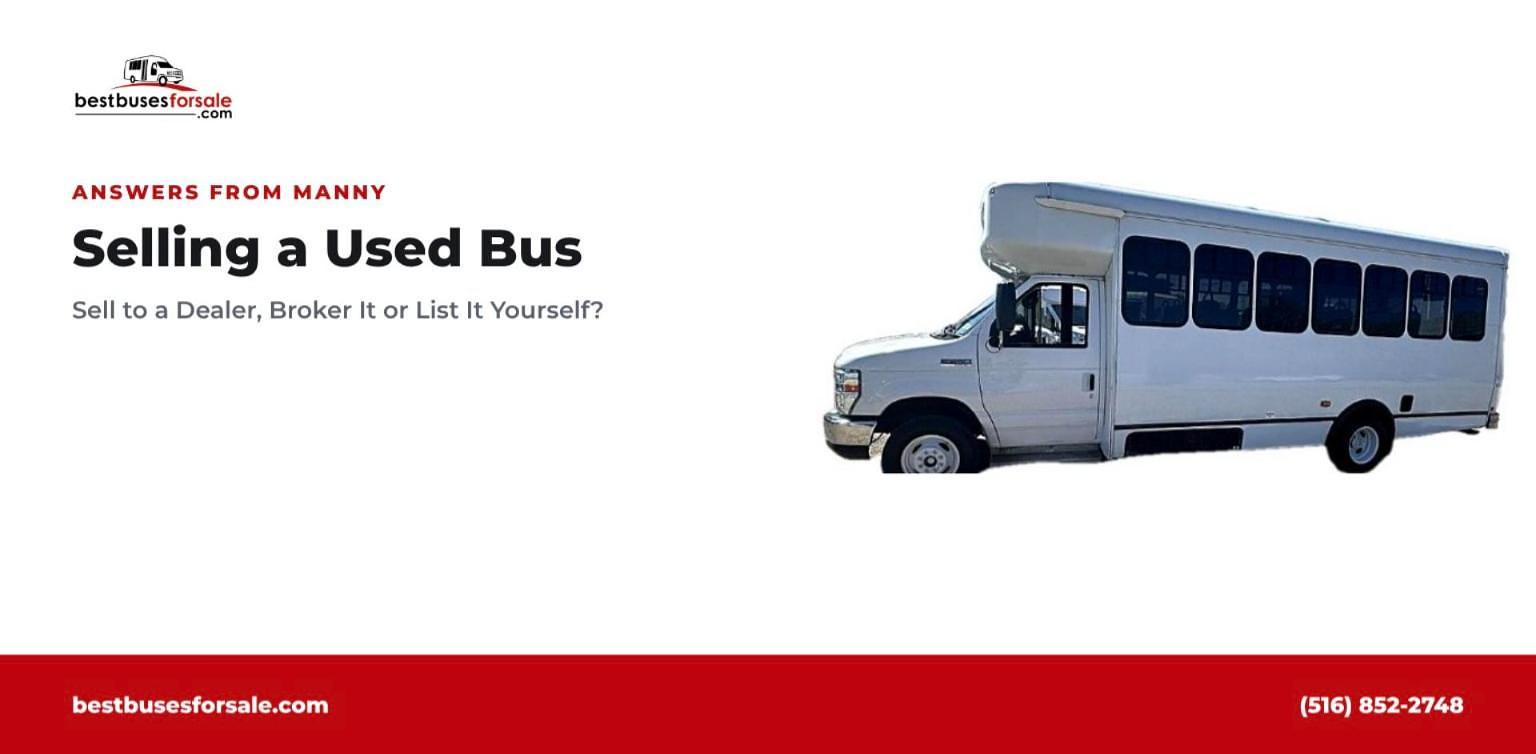
Selling a bus well is mostly a matter of choosing the right route and preparing the bus honestly. We buy buses, broker them and run a classifieds marketplace, so we see every version of the sale. Here are the questions sellers ask us most.
What's My Bus Worth?
Whatever buses like it actually sell for: same chassis, similar year, miles, seats and lift, and the same rust condition. Gather three to five real comparable listings (the worksheet in our Sell Your Bus Right guide walks you through it), then adjust for the differences. Price it too high and it sits, and a bus that has sat for months makes every new buyer wonder what's wrong with it.
Should I Sell to a Dealer, Broker It, or List It Myself?
Sell it to a dealer when you want it gone, paid in full and off your lot. You'll get less than retail because the dealer carries the risk and the reconditioning. Broker it when you want closer to retail and someone else to field buyers, handle the paperwork and close the deal while the bus stays with you. List it yourself in the classifieds when you want full control and don't mind taking the calls. Best Buses does all three, so we'll tell you honestly which fits your bus.
Will You Buy My Bus?
Send it through Sell Us Your Bus with the VIN, miles, photos and your price. We buy buses outright when they fit what we sell. If we can't buy it, we'll offer to broker it or point you to the classifieds. Either way, you'll hear back from us.
Manny's take: We don't buy buses with liens, and we'll need a copy of a clear title, front and back, before anything is final.
More: Sell Us Your Bus
How Does Brokering Work?
The bus stays with you, or we haul it to our yard if you'd rather. You take the photos using our photo guide, and you describe the condition honestly. We list it as a Brokerage Offering, answer buyers, and handle the deal and the paperwork. Our fee is built into the listed price, so the price you set is the price you get. The buyer pays transport.
How Do the Classifieds Work?
You place and control your own ad: price, photos, description. It runs for a flat monthly fee ($75 a month for buses $10,000 and under, $100 above), with no commission and cancel any time after the first month. You pay by PayPal, Venmo or card, and buyers contact you directly.
More: Best Buses Classifieds
I Still Owe Money on It. Can I Sell It?
Yes, but the lender has to be paid and release the lien before the title can pass. Get a payoff letter from your lender first. A dealer or buyer will want to see it, and the safest close pays the lender directly. We don't buy buses with liens, so pay it off before you sell it to us.
I Can't Find the Title. What Now?
Order a duplicate from the state that issued it before you advertise. Legitimate buyers won't pay without a title, and a missing one adds weeks to the deal. If a bus was bought with grant money, also ask your state DOT about any rules for selling it before you list it.
Do I Need to Take the Logos and Lettering Off?
Yes. Have your organization's name, phone numbers, USDOT number and logos removed before the bus leaves. Use a professional fleet de-identification company, not a body shop. They lift graphics without burning the paint and leave far less ghosting. Then the buyer isn't driving around with your name on it, and you aren't getting their calls.
What Happens to My Plates and Insurance After the Sale?
In most states the plates stay with you. Take them off, then cancel or move the insurance after the title has transferred and the bus is gone. If your state offers a notice-of-sale or release-of-liability filing, file it the same day. It protects you from tickets and tolls the new owner runs up.
How Long Will It Take to Sell?
It depends on price, photos and season. A bus priced with real comparables, with 25 good photos, a walkaround video and service records sells faster than one that's merely cheap. If you've had calls but no offers after a few weeks, it's usually the price or the photos. If you've had no calls, it's the price.
Should I Fix It Before I Sell?
Fix what scares buyers off: a soft floor, rusty steps, a dead A/C, a lift that won't cycle, warning lights. Don't do big upgrades you won't get back. A receipt for a fixed problem sells better than a discount for a problem you didn't fix.
We Have Several Buses. Should We Sell Them as a Fleet?
List each bus on its own with its own photos, miles and condition. Buyers shop by unit, and one tired bus can drag down a group price. If a buyer wants the set, they'll ask. We buy fleets too, so send the list through Sell Us Your Bus.
What's the Safest Way to Pay or Get Paid?
Bank wire or a cashier's check you verify by calling the issuing bank from a number you look up yourself. The classic scams: a buyer "overpays" with a fake check and asks for the difference back, or pushes an escrow site you've never heard of. Before you wire money to anyone, call them on a number you already know and confirm the instructions out loud. Email instructions can be faked.
Manny's take: If you're wiring us, call (516) 852-2748 and confirm the wire instructions with me first. We'll never change our bank details by email.
Have another question? We answer 42 of them in Shuttle Bus Questions, Answered.
Go Further
The full answers, worksheets and checklists are in our guides at the Best Buses Store: Buy the Right Bus for buyers, Sell Your Bus Right for sellers, plus the Church Bus Buying Kit and the Wheelchair Bus Owner's Guide. Looking for a particular bus? Tell us on Find Me a Bus. Selling one? Start at Sell Us Your Bus.
About the Author
Manny Casamassima is President of Best Buses For Sale, a family-run shuttle and wheelchair bus dealership in Huntington, New York. His family has been in transportation and logistics for decades. He buys buses nationwide, mostly from outside the Rust Belt, drives every one himself and brings them home on the company's own flatbeds. Questions about a bus, yours or ours, are always welcome through the contact page or at (516) 852-2748.
Sources
Rules and figures above were checked in November 2026 against these sources. Rules change and states add their own, so confirm anything that decides a purchase; this is plain-language guidance, not legal or tax advice.