
Non-CDL Shuttle Bus Capacity: How Many Passengers?
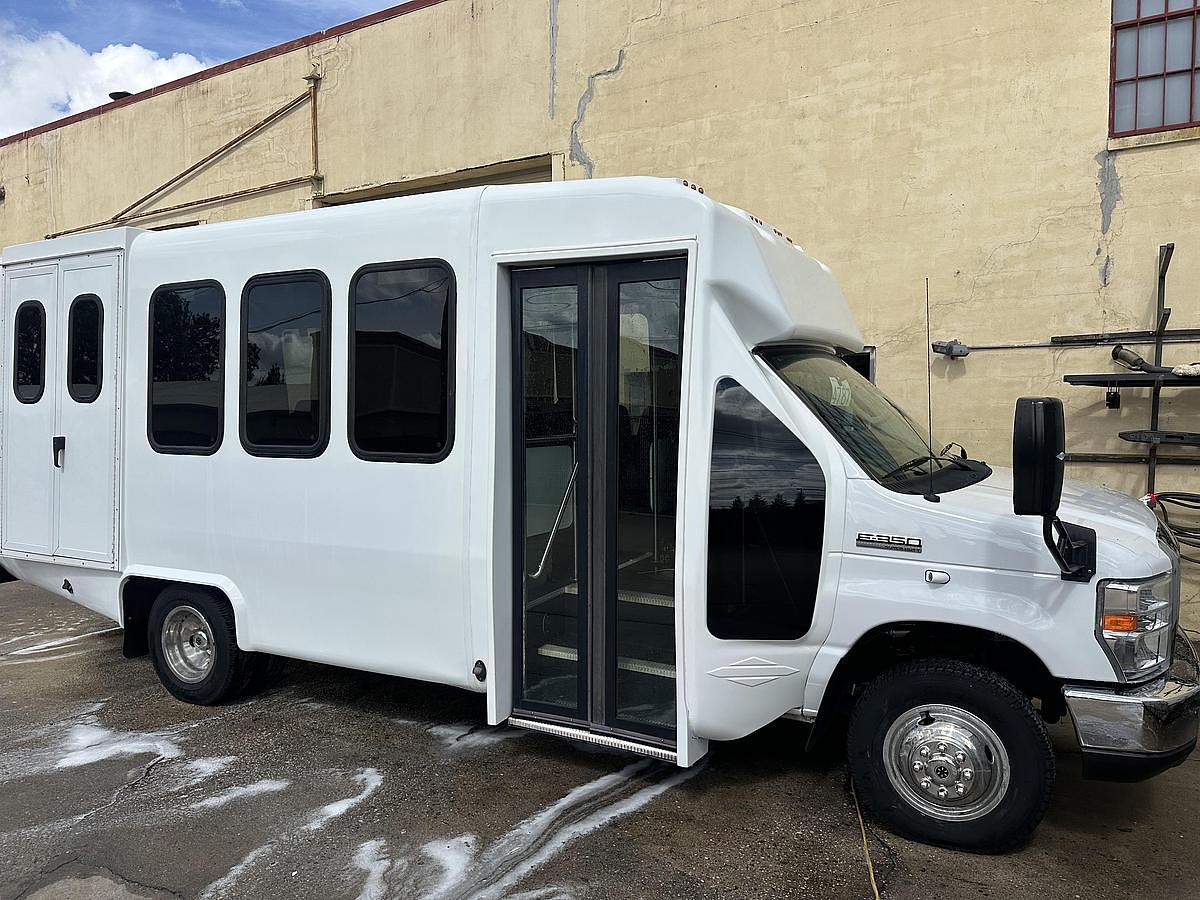
A non-CDL shuttle bus can carry up to 14 passengers plus the driver. Under federal rules, a bus that is designed to carry 16 or more people, counting the driver, needs a driver with a commercial driver's license (CDL). The bus also has to stay under 26,001 lbs gross vehicle weight rating (GVWR).
That one number, 15 seats total, shapes a lot of buying decisions. Churches, NEMT companies, hotels and senior communities all want the most seats they can get while still letting any staff member with a regular license drive. Here is how the rule works, what it means for wheelchair buses, and how to read a listing so you don't buy the wrong bus.
The federal rule: 16 people including the driver
The CDL rules live in 49 CFR 383.5. A single vehicle needs a CDL driver if it has a GVWR of 26,001 lbs or more (Class B), or if it is designed to transport 16 or more passengers, including the driver (Class C). A driver of a passenger-carrying CMV also needs a Passenger (P) endorsement, which takes a knowledge test, a skills test and entry-level training for first-timers.
So the math for a non-CDL bus is simple: 15 seats total, which means 14 passengers plus the driver. Most of the cutaway shuttle buses we sell, built on Ford E-350, E-450 and Transit chassis, are rated well under 26,001 lbs, so for them the seat count is what decides the license. Always confirm the GVWR on the sticker in the driver's door jamb.
Why "designed to transport" matters
The rule talks about how the bus is designed, not how many people ride on a given day. A 20-passenger bus is still a CDL bus even if you only ever carry eight people. If you need a non-CDL bus, buy one that was built or configured as a 15-seat bus from the start, and keep the paperwork that shows its seating plan.
FMCSA's guidance does not spell out every edge case, like removed seats or flip seats. If your bus has been modified, call your state DMV or the FMCSA Information Line at 1-800-832-5660 before you put it in service.
How wheelchair positions fit in
On a wheelchair shuttle, each securement position takes the floor space of two or more seats. That is why you see listings like "13/2" or "12/4": the first number is ambulatory seats and the second is wheelchair positions. The federal rule doesn't say exactly how wheelchair positions and fold-away seats count toward the 16-person line, so ask the seller how the bus was certified and confirm with your state DMV before you hire non-CDL drivers.
If your riders are mostly ambulatory, a 14-passenger bus with no lift gives you the most seats under the non-CDL line. If you serve wheelchair users every day, a 12/4 or 8/4 layout often works better. For more on lifts and securement, see our post on buying a reconditioned wheelchair shuttle bus.
Carrying passengers for pay: other federal rules can still apply
No CDL does not mean no rules. FMCSA treats a vehicle designed or used to carry 9 to 15 people, including the driver, for compensation in interstate commerce as a commercial motor vehicle. Carriers paid directly by passengers must register with FMCSA, mark the vehicle with a USDOT number and follow safety rules in parts 385 and 390 through 396.
A church taking members to a retreat is a different situation from a company selling rides across state lines. If you run a paid service, check FMCSA's small passenger-carrying vehicle page or talk to a compliance adviser.
Your state may be stricter
States issue CDLs under the federal standard, but FMCSA notes that states may have a more restrictive category for a class of license. Programs that carry students or medical riders can also have their own driver and vehicle requirements. Before you buy, check with your state DMV and, for NEMT, your Medicaid broker or state agency.
When a CDL bus makes more sense
If you regularly move more than 14 people, two non-CDL buses can be the right answer, since any staff driver can take either one. If you have CDL drivers, a larger bus such as a Ford F-550 with 24 to 28 seats can move a group in one trip. Our post on non-CDL shuttle buses walks through that trade-off.
Non-CDL shuttle buses for sale now
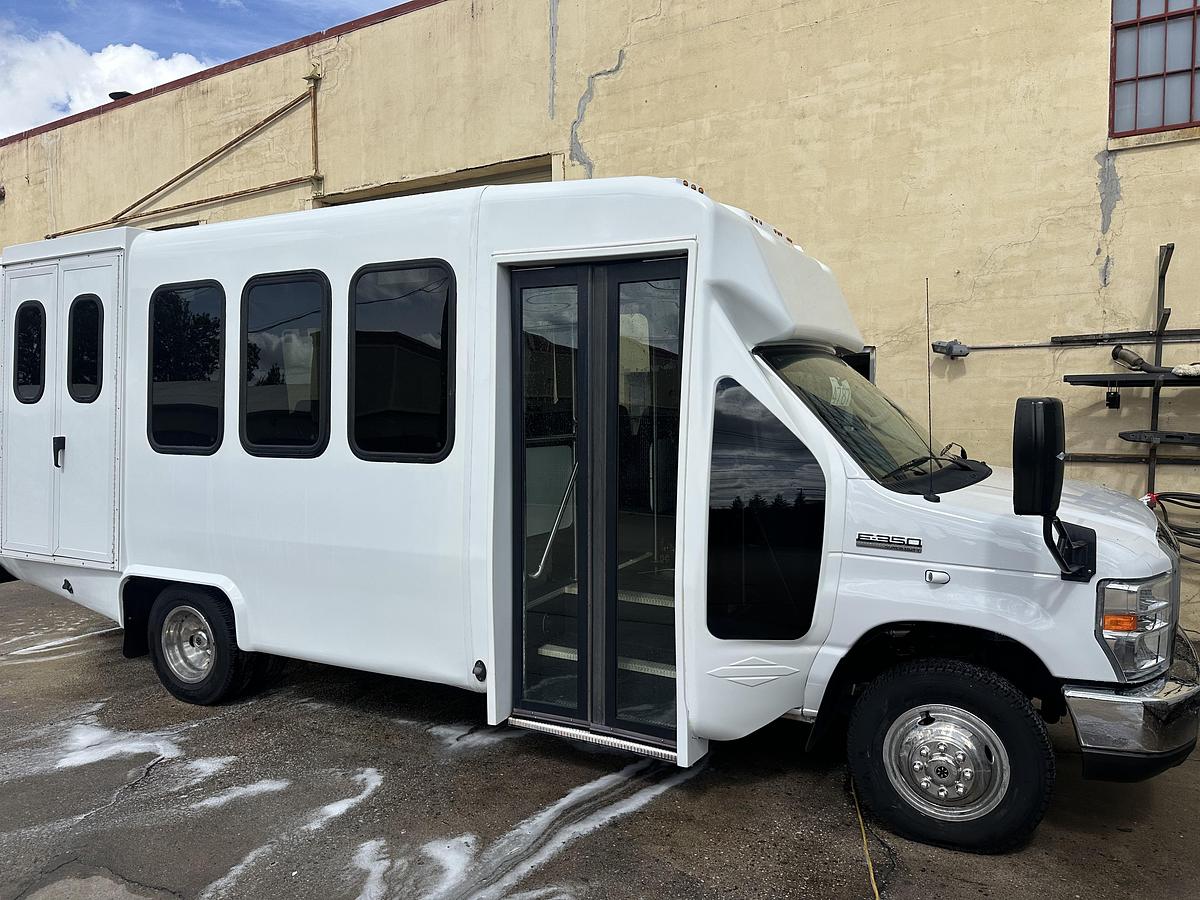
2018 Ford E-350 Non-CDL 13/2 Wheelchair Shuttle Bus (Stock B1077) – $55,990. A Diamond Coach composite body on the E-350 chassis with the 6.8L Triton V10 gas engine and 42,759 actual miles. It seats 13 passengers plus the driver with 2 wheelchair positions and a commercial lift, plus front and rear climate control, privacy glass and passenger seatbelts. Before delivery it is inspected and reconditioned, and the lift is serviced and tested. See the listing.
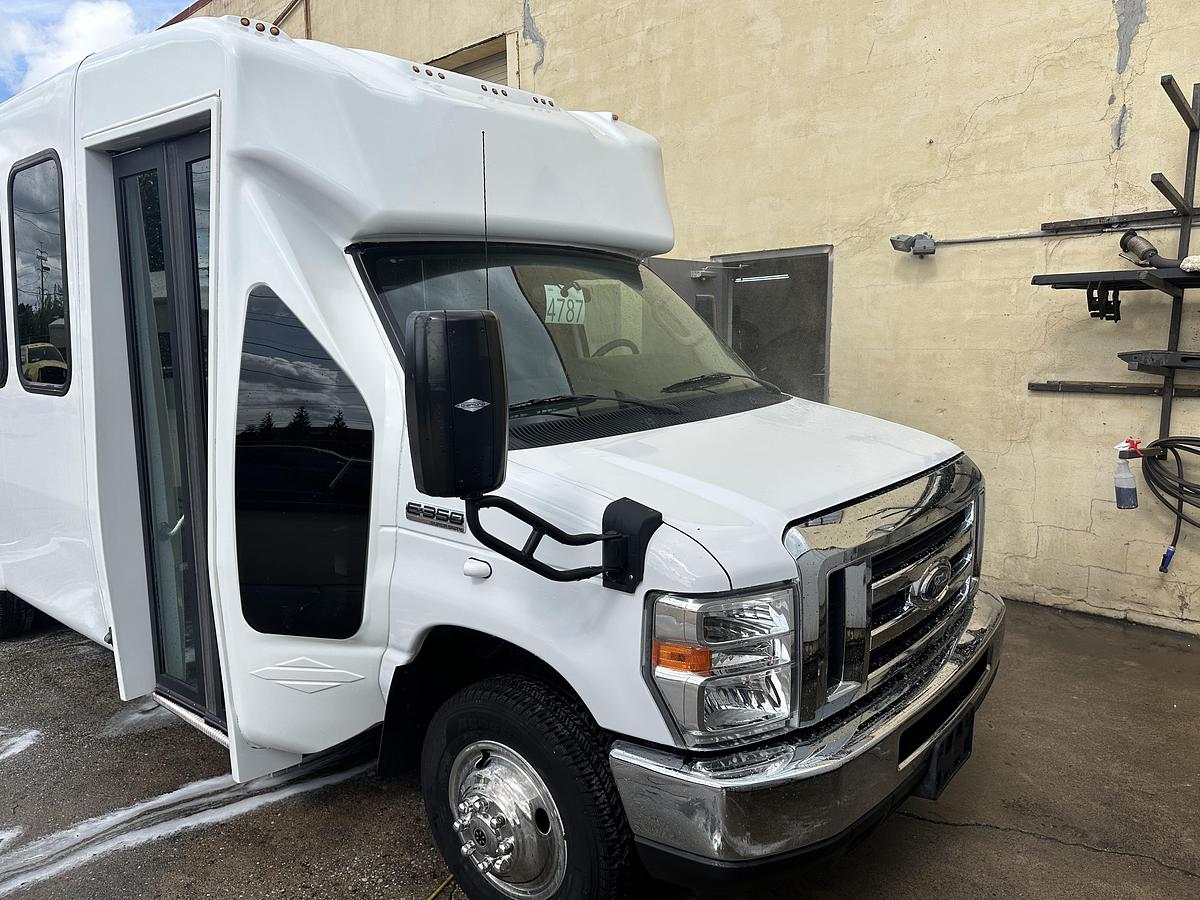
2018 Ford E-350 Non-CDL 13/2 Wheelchair Shuttle Bus, matching pair (Stock B1078) – $55,990. The twin to B1077: same Diamond Coach body, 6.8L V10 and 13 + driver with 2 wheelchair positions, with 50,440 actual miles. It is finishing up in our shop now, so this is a good chance to run two identical non-CDL buses side by side. See the listing.

2012 Ford E-450 Non-CDL 14-Passenger Shuttle with Luggage (Stock B1007) – $24,000. If you want the full 14 + driver with no lift, this is it. It has the 6.8L V10, a 5-speed automatic, dual rear wheels, 101,000 miles and a fully enclosed rear luggage compartment, which makes it a fit for hotel, airport and church trips. It is a one-owner, rust-free Southern unit with a clean title, and it is available now at our Huntington, NY location. See the listing.
Frequently asked questions
Can a 15-passenger bus be driven without a CDL? If "15-passenger" means 15 seats including the driver, yes, as long as the GVWR is under 26,001 lbs. If it means 15 passengers plus a driver, that is 16 people and federal rules require a CDL with a passenger endorsement.
Does the bus weight matter if I stay under 16 seats? Yes. Any single vehicle with a GVWR of 26,001 lbs or more needs a Class B CDL, no matter how many seats it has. Most E-350 and E-450 shuttles are well under that, but check the door-jamb sticker.
Do I need a USDOT number for a non-CDL bus? It depends on how you use it. FMCSA requires registration and a USDOT number for carriers paid to move 9 to 15 people, including the driver, across state lines. A church or senior community running its own trips may not need one, so check FMCSA's guidance for your situation.
Ready to find your bus?
Call or text Manny at (516) 852-2748 to talk through seat counts, licensing and which layout fits your riders. We deliver anywhere in the U.S., and we'll walk you around any bus on a live FaceTime call so you can see it before you buy. Browse everything we have at bestbusesforsale.com/listings.
This post is general information, not legal advice. Licensing rules change and vary by state, so confirm with your state DMV.
Sources
- 49 CFR 383.5 – Definitions (eCFR)
- FMCSA – Commercial Driver's License: Drivers
- FMCSA – Passenger Carrier Guidance Fact Sheet
- FMCSA – Small Passenger-Carrying Vehicles